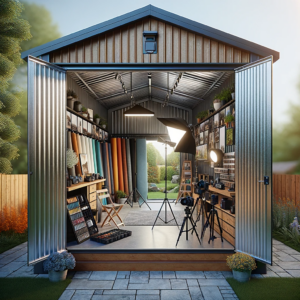
This metal shed designed as a spacious photography studio and features a wall dedicated to various photography backdrops. The studio is well-equipped with all the necessary photography gear and the open door allows natural light to enhance the setting, and has a garden backdrop visible through the open doors.
Embracing the Photography Shed Trend
The recent trend of transforming ordinary backyard sheds into personalized photography studios is capturing the interest of both amateur and professional photographers alike. Traditionally, sheds have been used for storage or as workshops, but now they are being creatively repurposed to cater to the specific needs of photographers. These photography shed studios offer a private and dedicated space for photographers to practice their craft, experiment with different lighting and setups, and store their equipment securely. The convenience of having a studio so close to home eliminates the need for renting expensive studio spaces, making it a cost-effective solution. Additionally, the ability to customize these sheds to individual tastes and requirements means that each photography studio shed can be a unique and inspiring creative haven.
Advantages of a Shed Photography Studio
Privacy and Personalization
A backyard photography studio shed offers unparalleled privacy, which is ideal for photographers who require a quiet, undisturbed environment to focus on their work. This privacy is especially beneficial for projects that require concentration, quiet area for video recording, or photography of sensitive subject matter. The personalization aspect of a shed photography studio is a significant advantage. It also provides a blank canvas to personalize and tailor to specific photography needs. Photographers have the freedom to transform the space into a creative hub that reflects their style and meets their specific needs, whether that’s in terms of lighting, backdrops, or equipment layout.
Cost-Effectiveness
Setting up a photography studio in a shed is significantly more budget-friendly than renting a commercial space. With Keen’s Buildings you can buy a 10×10 photography studio shed starting as low as $42/Month. Unlike the recurring costs associated with renting a commercial studio space, converting a shed into a photography studio involves a one-time investment in the structure and customization, leading to long-term savings. This approach is particularly advantageous for freelance photographers or those just starting their careers, as it reduces overhead costs, making professional photography more accessible and sustainable financially. Shop sheds on sale online or call 386-339-167 to talk to a shed specialist.
Flexibility in Design
The flexibility to design and modify the interior of a photography shed studio to suit various photography styles and offer tremendous creative freedom is a major advantage. From hanging backdrops to installing different light setups, the possibilities are endless. Photographers can adapt the space for different types of photography, such as portrait, product, or fine art, ensuring that the studio always meets their project requirements. Another key aspect of this flexibility is the potential for future modifications. As a photographer’s style evolves or as they experiment with new techniques, the studio can be easily adapted. This might include changing the interior layout, upgrading equipment, or adding specialized lighting and backdrops to enhance the studio’s functionality. You can also use the vast shed sizes and dimensions to create a shed studio that fits your needs. From 10×10 square designs that fit all your equipment and gives you an open area for shooting, to 14×20 spacious sheds allowing for more depth and sitting areas if needed, you are not limited in the space you need for your photography.
Setting Up Your Backyard Photography Studio
Essential Equipment**
When setting up your photography shed, the essential equipment includes cameras, lenses, tripods, lights, reflectors, and backdrops.
When setting up your photography shed it’s vital to start with the essential equipment includes cameras, lenses, tripods, lights, reflectors, and backdrops. This includes digital or traditional film cameras and a variety of high-quality lenses to suit different shooting scenarios. Tripods are crucial for stability, especially in long exposure shots, and holding your lighting equipment. Lighting equipment, including both continuous and flash lighting, along with reflectors, is essential for controlling shadows and highlights. Backdrops, varying in color and texture, allow for creative versatility in your shoots. This foundational equipment forms the backbone of your photography studio, enabling a wide range of photographic expressions.
Lighting and Acoustics
Good lighting is crucial for photography and thus demands careful consideration in your shed studio. . Experiment with both natural light, which can offer a soft, diffused look, and artificial lighting, which provides consistency and control, can yield diverse aesthetic results. Additionally, if your work extends to video production or interviews, the acoustics of your shed become significant. Sound-absorbing materials and strategic placement of equipment can help minimize echo and improve audio quality, making your shed a versatile space for various multimedia projects.
Interior Design Tips
The interior design of your photography shed should be a blend of functionality and visual appeal. Use space-saving furniture that doesn’t compromise on efficiency, like foldable tables or wall-mounted shelves. Efficient organization of your equipment is crucial to maintain a clutter-free and productive workspace. Consider the workflow within the studio, ensuring that commonly used items are easily accessible. Aesthetic elements shouldn’t be overlooked; a well-designed space can not only inspire creativity but also serve as an appealing backdrop for shoots.
Creative Ideas for Your Photography Shed
Thematic Decor
Decorate your photography shed by personalizing it in line with the genres of photography that ignite your passion. For instance, a vintage decor theme can create an ideal setting for portrait photography, imbuing your shots with an authentic, timeless feel. Conversely, if your focus is on product photography, a minimalist setup with neutral colors and clean lines can help keep the focus on the product itself. Thematic decor not only enhances the aesthetic appeal of your studio but also sets the mood and tone for your photography.
Utilizing Natural Light
Natural light can be one of the most flattering and dynamic forms of illumination in photography. To make the most of this resource, consider having multiple windows or larger windows, horizontal transoms, or installing skylights in your photography shed. These additions can flood the space with soft, natural light, which is perfect for a variety of photography styles. The direction and quality of natural light can also change throughout the day, offering a range of lighting conditions to experiment with. Additionally, the presence of natural light can make the studio a more pleasant and visually appealing workspace.
Challenges and Solutions in Shed Photography
Space Management
One of the challenges in converting a pre-owned shed into a photography studio could possibly be managing the limited space effectively. To maximize the area, it’s essential to utilize vertical space for storage. This can be achieved through the installation of shelves, wall hooks, and overhead compartments, which provide ample storage without occupying the floor space. Choosing compact and multi-functional equipment can also make a significant difference. Foldable tripods, collapsible backdrops, and smaller, more efficient lighting equipment can help conserve space while still providing the functionality needed for a wide range of photography styles.
Pro Tip: You can use backdrops to hide shelves to look more appealing to customers.
Weather Considerations
Ensure proper insulation and ventilation to protect your equipment and create a comfortable working environment. Weather can significantly impact a photography shed, so it’s crucial to address issues like insulation and ventilation. Proper insulation is essential to protect sensitive photography equipment from extreme temperatures and humidity, which can cause damage over time. This also creates a more comfortable working environment, crucial for long photography sessions. Equally important is effective ventilation, which helps manage the temperature and prevents the buildup of condensation, ensuring the longevity of your equipment. These adaptations not only protect your investment but also make the shed a more pleasant and functional space for photography year-round.
Case Studies: Successful Photography Studio Sheds
Here are some real-life examples of photographers who have successfully transformed sheds into professional photography studios, each showcasing unique approaches and styles:
1. Bianca Merrell: Bianca, a photographer specializing in family and couple portraits, converted a barn-style shed into her studio. This type of shed offers ample space and increased headspace, allowing for various scene setups. Bianca’s work demonstrates how a spacious shed can be effectively utilized for diverse photography needs. https://www.biancamerrellphoto.com/
2. Annalise Photography: Focusing on canine photography, Annalise switched from renting a larger studio to a garden studio shed on her property. This transition allowed her to focus exclusively on photographing dogs, showcasing how a shed studio can cater to niche photography areas. https://www.sheshedphotography.com/
3. Irene Rudnyk: Irene Rudnyk, a Calgary-based photographer, used a simple storage shed in her backyard to produce ethereal portraits. She demonstrates that a minimalistic approach, utilizing natural light and a fabric backdrop, can create stunning results without the need for an elaborate setup. https://www.youtube.com/@IreneRudnyk
4. Made on 23rd: This project involved transforming a corner of a garden shed into a photo studio for still-life photography. The studio incorporates cedar fence boards and a whitewash paint finish, proving that creative material choices can enhance the functionality and aesthetics of a small space. https://www.madeon23rd.com/
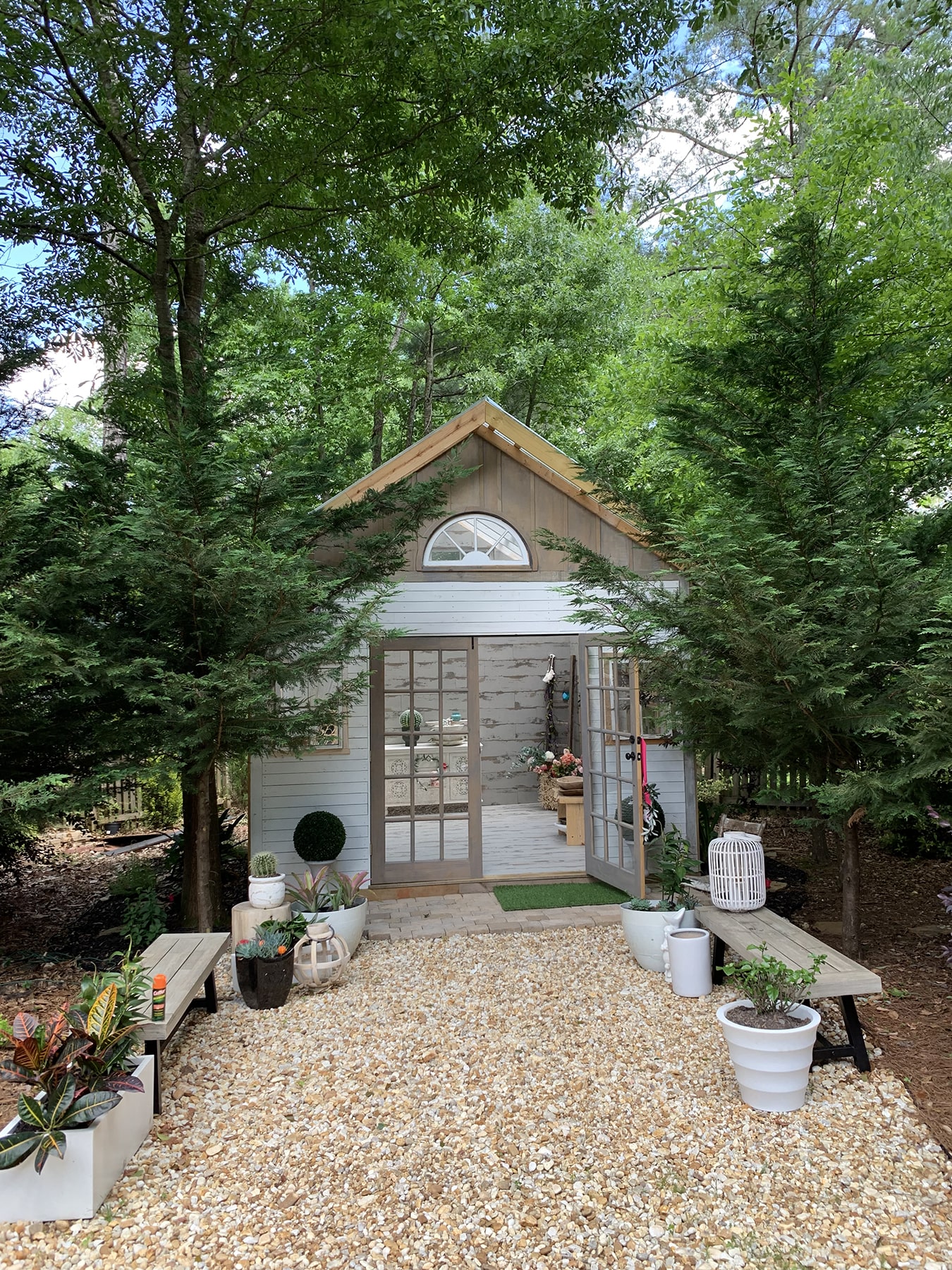
5. Karen Robert: Karen Robert, with 20 years of professional photography experience, built a “she-shed” photo studio from scratch. The studio, equipped with whitewashed laminate flooring and antique windows, serves as a multi-purpose space for portraits, knitting, and painting. This example highlights the potential of a DIY approach to create a versatile and uniquely designed photography studio. https://www.karenroberts.com/the-studio
These case studies offer inspiration and practical insights into how photographers have creatively utilized shed spaces, adapting them to their specific needs and styles.
Legal Considerations for a Photography Shed
Ensure you understand and comply with local zoning laws, building codes, and business licenses. It’s important to operate legally and transparently, which may involve obtaining specific permits or approvals from local authorities. While there shouldn’t be to many differences between a home based photography studio and a shed photography studio given the complexity and variation in legal requirements, it’s advisable to seek legal advice specific to your location and business type. A lawyer or accountant can provide tailored advice to ensure you’re fully compliant and protected.
Marketing Your Backyard Photography Studio
Online Presence
Build a strong online presence through a website and social media to attract clients to your backyard photography studio.
Website: Your photography studio’s website should be a digital portfolio showcasing your best work. Include galleries segmented by photography type (weddings, portraits, etc.) to demonstrate your range. Ensure the site is user-friendly and optimized for search engines (SEO) to improve visibility (We suggest Internet Marketing Company Integrated Growth Partners). A blog section can provide insights into your photography style and recent projects, further engaging potential clients.
Social Media Engagement: Establish a strong presence on platforms like Instagram, Facebook, and Pinterest, where visual content thrives. Regularly post high-quality images from your shoots, behind-the-scenes glimpses of your studio, and client testimonials. Engaging with followers through comments, stories, and live sessions can build a community around your brand.
Online Advertising: Consider using targeted ads on social media and Google as well as mom blogs, community events and local photographer list resources. Paid advertising can be directed at your local area, ensuring you reach potential clients nearby. Use analytics to refine your ad strategies based on performance.
Networking Strategies
Local Photography Events: Attend local photography exhibitions, workshops, and meetups. These events provide opportunities to connect with fellow photographers and people interested in photography. Sharing experiences and tips can lead to collaborations or referrals.
Online Photography Forums and Groups: Join photography forums and social media groups. Engaging in these communities can raise awareness of your studio. Share your expertise, answer questions, and participate in discussions to establish yourself as a knowledgeable and approachable professional.
Collaborations with Local Businesses: Collaborate with local businesses like event planners, florists, or fashion boutiques. These partnerships can be mutually beneficial. For example, offer to photograph a local event in exchange for promotion, or work with fashion boutiques for styled shoots that feature both your photography and their products.
Referral Program: Implement a referral program where past clients receive benefits for referring new clients to you. Word-of-mouth is powerful in photography, and incentivizing referrals can significantly boost your client base.
By combining a robust online presence with active networking, you can effectively market your backyard photography studio, attract a diverse clientele, and build a strong brand reputation in your community and beyond.
DIY vs Professional Shed Setup
Weigh the pros and cons of setting up your photography studio shed yourself versus hiring professionals. DIY shed kits can be slightly more cost-effective but very time consuming and does not always include roof materials or painting. Professional shed setup ensures both quality and efficiency often with a warranty where you don’t have to worry about the workmanship of your studio shed. Keen’s Buildings offers free shipping and installation in our service area along with top-off class warranty on all sheds.
Photography Studio Shed Maintenance
Regular maintenance is key to keeping your studio in top condition. This includes cleaning, checking for damages, and updating equipment. Maintaining your photography studio shed is crucial for ensuring a professional and functional work environment. Here are some key aspects to focus on for regular maintenance:
1. Regular Cleaning: Dust and dirt can accumulate quickly, especially in a smaller space like a shed. Regular cleaning is essential to maintain a professional appearance and prevent dust from settling on your equipment. This includes wiping down surfaces, vacuuming or sweeping floors, and ensuring that lenses and equipment are dust-free.
2. Damage Checks: Periodically inspect the shed for any signs of damage. This includes checking for leaks, mold, or structural damage. Addressing these issues promptly can prevent more significant problems later. Ensure that the shed is weatherproof and that the roof, windows, and doors are in good condition to protect your equipment from the elements.
3. Equipment Updates and Checks: Regularly check your photography equipment for any signs of wear and tear. This includes cameras, lenses, tripods, lighting equipment, and backdrops. Keeping your equipment in top condition is essential for high-quality photography. Plan for periodic upgrades or replacements as technology advances or your needs change.
4. Climate Control: Depending on your location, controlling the climate inside your shed can be crucial. This might involve installing heating for colder months and air conditioning or fans for warmer periods. Proper climate control not only makes the space more comfortable but also protects your equipment from extreme temperatures and humidity.
5. Organizational Updates: As your photography business evolves, so too will your needs for space and storage. Regularly reorganize and declutter your space. Invest in storage solutions that maximize space, like shelving units or pegboards for hanging equipment. This keeps the studio organized and efficient.
6. Safety Checks: Ensure that all electrical installations are safe and up to code. Regularly check power strips, extension cords, and lighting equipment for any signs of damage or wear. Also, keep a first-aid kit and fire extinguisher accessible for emergencies.
By keeping up with these maintenance tasks, you can ensure that your photography studio shed remains a safe, efficient, and pleasant place to work, helping you to deliver the best possible service to your clients.
The Rise of the Photography Studio Shed
The photography studio shed concept is revolutionizing how photographers approach their workspace, combining cost-effectiveness with the convenience of a home-based studio. This innovative concept is especially beneficial for those who do not have additional space within their homes or who find renting commercial studio spaces financially prohibitive. By converting a simple backyard shed into a photography studio, photographers can create a personalized and private space to hone their craft without the constraints of traditional studio rentals. This trend is not only economically savvy but also allows for greater creative freedom, as photographers can design and customize their studio sheds to fit their specific artistic and functional needs.
The Future of Photography Studio Sheds
The future of photography studio sheds is evolving with several key trends. Smart lighting systems are becoming popular for their precise control and efficiency. Flexible and modular layouts are on the rise, allowing for adaptable spaces that can cater to various photography styles. The integration of augmented and virtual reality is also anticipated, offering innovative ways to create and showcase work. Additionally, a focus on sustainability through energy-efficient practices and materials is becoming more important in studio design. These trends indicate a shift towards more technologically advanced, versatile, and environmentally conscious photography shed studios.
FAQs About Shed Photography Studios
1. What is the ideal size for a photography studio shed? Most photographers tend to prefer studios ranging from 10×10 sheds up to 14×24 sheds depending on their work. The larger sheds can handle more storage and work space both for shooting and editing, while also maintaining space comfortable for clients.
2. How can I control lighting effectively in a shed photography studio? Many photographers prefer to use natural light from extra windows, transoms, as well as larger doors or roll-up doors, in combination with lighting equipment and external flash. Depending on your shoot, you may also want to cover the windows and remove natural light to create more dramatic images using only the artificial lighting.
3. What are some budget-friendly ways to equip my photography studio shed? The use of more natural light to reduce costs of equipment, while shelving can help you maintain a effective workspace, allowing you to make better use of smaller areas. Also use different texters and wall coverings to allow different background.
4. How do I deal with temperature fluctuations in my shed studio? Just like a house, you can insulate your shed, to protect it from the temperature outside, Keen’s Buildings also has many clients who ask for AC unit cut outs, or larger electrical panels to facilitate heating, and cooling units.
5. Can I legally run a photography business from a shed in my backyard? Running a photography studio from your shed should not be much different than running a photography business from your house, just make sure to understand and comply with local zoning laws, building codes, and business licenses.
6. What are some creative interior design ideas for a photography shed? For creative photo studio sheds and she sheds turned into photography studios check out.




 Here are some real-life examples of photographers who have successfully transformed sheds into professional photography studios, each showcasing unique approaches and styles:
1. Bianca Merrell: Bianca, a photographer specializing in family and couple portraits, converted a barn-style shed into her studio. This type of shed offers ample space and increased headspace, allowing for various scene setups. Bianca’s work demonstrates how a spacious shed can be effectively utilized for diverse photography needs. https://www.biancamerrellphoto.com/
2. Annalise Photography: Focusing on canine photography, Annalise switched from renting a larger studio to a garden studio shed on her property. This transition allowed her to focus exclusively on photographing dogs, showcasing how a shed studio can cater to niche photography areas. https://www.sheshedphotography.com/
3. Irene Rudnyk: Irene Rudnyk, a Calgary-based photographer, used a simple storage shed in her backyard to produce ethereal portraits. She demonstrates that a minimalistic approach, utilizing natural light and a fabric backdrop, can create stunning results without the need for an elaborate setup. https://www.youtube.com/@IreneRudnyk
4. Made on 23rd: This project involved transforming a corner of a garden shed into a photo studio for still-life photography. The studio incorporates cedar fence boards and a whitewash paint finish, proving that creative material choices can enhance the functionality and aesthetics of a small space. https://www.madeon23rd.com/
5. Karen Robert: Karen Robert, with 20 years of professional photography experience, built a “she-shed” photo studio from scratch. The studio, equipped with whitewashed laminate flooring and antique windows, serves as a multi-purpose space for portraits, knitting, and painting. This example highlights the potential of a DIY approach to create a versatile and uniquely designed photography studio. https://www.karenroberts.com/the-studio
These case studies offer inspiration and practical insights into how photographers have creatively utilized shed spaces, adapting them to their specific needs and styles.
Here are some real-life examples of photographers who have successfully transformed sheds into professional photography studios, each showcasing unique approaches and styles:
1. Bianca Merrell: Bianca, a photographer specializing in family and couple portraits, converted a barn-style shed into her studio. This type of shed offers ample space and increased headspace, allowing for various scene setups. Bianca’s work demonstrates how a spacious shed can be effectively utilized for diverse photography needs. https://www.biancamerrellphoto.com/
2. Annalise Photography: Focusing on canine photography, Annalise switched from renting a larger studio to a garden studio shed on her property. This transition allowed her to focus exclusively on photographing dogs, showcasing how a shed studio can cater to niche photography areas. https://www.sheshedphotography.com/
3. Irene Rudnyk: Irene Rudnyk, a Calgary-based photographer, used a simple storage shed in her backyard to produce ethereal portraits. She demonstrates that a minimalistic approach, utilizing natural light and a fabric backdrop, can create stunning results without the need for an elaborate setup. https://www.youtube.com/@IreneRudnyk
4. Made on 23rd: This project involved transforming a corner of a garden shed into a photo studio for still-life photography. The studio incorporates cedar fence boards and a whitewash paint finish, proving that creative material choices can enhance the functionality and aesthetics of a small space. https://www.madeon23rd.com/
5. Karen Robert: Karen Robert, with 20 years of professional photography experience, built a “she-shed” photo studio from scratch. The studio, equipped with whitewashed laminate flooring and antique windows, serves as a multi-purpose space for portraits, knitting, and painting. This example highlights the potential of a DIY approach to create a versatile and uniquely designed photography studio. https://www.karenroberts.com/the-studio
These case studies offer inspiration and practical insights into how photographers have creatively utilized shed spaces, adapting them to their specific needs and styles.